

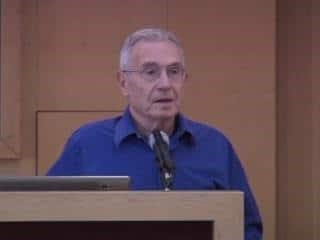
The Center for Natural Resources and Environmental Research mourns the passing of its founder, Professor Mordechai Shechter. The following article presents and explains his choice.
The Third Way of Dying
Why a good death should include the possibility of voluntary assisted dying
In her thoughtful essay, “People Say They Want to Die at Home. I Think About It Differently,” Dr. Daniela J. Lamas asks an important question: What is a good death?
Her answer challenges a powerful assumption in contemporary medicine. We have come to associate a good death with dying at home, surrounded by family, rather than in an intensive care unit surrounded by machines, tubes and alarms. But, as an intensive-care physician, Lamas has learned that reality is more complicated. Some people die peacefully in an ICU. Others suffer at home. Some patients need intensive medical care until the end. Home hospice is not necessarily better simply because it is home.
I agree with much of Lamas’s argument. But I believe it leaves out an important dimension of the question.
At 89, questions about the end of life are no longer entirely theoretical for me. Like many people who have reached an advanced age, I have had increasing opportunities to observe the different ways in which people experience aging, illness, dependence and dying. My professional life has also been devoted largely to thinking about human choices and the consequences of public decisions.
These experiences have not given me a special authority on how anyone should die. They have given me, however, a strong conviction that the individual’s considered wishes should remain central when decisions are made about the final stage of life.
That conviction leads to a question largely absent from Lamas’s discussion.
The debate about a good death is often framed as a choice between where we die and how we are cared for while we die. Should we be at home or in a hospital? Should we receive intensive treatment or hospice? Should we attempt another intervention or allow nature to take its course?
These are important questions.
But there is another:
Should a competent person who is approaching the end of life, suffering from an irreversible medical condition, and repeatedly and voluntarily asking for assistance have some control over when the dying process ends?
That is the question of voluntary assisted dying, or VAD.
I do not suggest that VAD is the right choice for everyone. Nor do I believe that it should replace hospice, palliative medicine or compassionate care. Most people will reasonably choose to allow death to come naturally, with their symptoms treated as effectively as possible.
But there is a third possibility that deserves serious consideration.
A person may conclude that continued medical treatment is no longer desirable, yet may also conclude that simply waiting for natural death is itself an unacceptable burden. For such a person, carefully regulated VAD can provide an additional choice.
The argument, therefore, is not that everyone should have assistance in dying.
It is that no single conception of a good death should be imposed on everyone.
Switzerland: a different model
The international discussion is particularly interesting because countries have chosen very different approaches.
Switzerland occupies a distinctive position. Its law prohibits active euthanasia, but assisting another person’s suicide is not a criminal offence when it is not motivated by selfish motives. This has permitted the development of organizations such as DIGNITAS and EXIT that facilitate assisted suicide within a regulated medical and legal environment.
Switzerland is also unusual because its system does not impose a general citizenship or residence requirement equivalent to those found in many other jurisdictions. Consequently, foreign nationals who meet the relevant requirements can, in principle, obtain assisted suicide in Switzerland. This has made Switzerland a destination for some people from countries where assisted dying is unavailable.
This is an important distinction.
Switzerland does not offer foreigners a general right to “VAD.” Nor does it legalize voluntary euthanasia in which a physician directly administers the lethal substance. The Swiss model is principally one of assisted suicide, in which the individual performs the final act.
Nevertheless, the Swiss experience demonstrates something important for the broader argument: the ethical and legal question of assisted dying cannot be contained within national borders. Where one society denies an option that another society permits, people who have the means and determination to travel may seek that option elsewhere.
That creates an uncomfortable question.
If a competent dying person can lawfully obtain assistance in another country, is the prohibition in his or her own country actually protecting the person—or merely determining where the person must go to exercise the choice?
Switzerland therefore provides not a model that every country must copy, but a useful challenge to the assumption that assisted dying can simply be excluded from the international conversation.
The economic dimension of an ageing society
There is another dimension of the debate that is rarely discussed openly: the economics of longevity.
This is an uncomfortable subject because economic considerations can easily be abused. A society must never communicate to an elderly person that his or her life has become financially inconvenient. The value of a human life cannot be reduced to its contribution to GDP, tax revenues or the balance sheet of a pension system.
Nevertheless, refusing to discuss the economics of ageing does not make those economics disappear.
Modern societies are undergoing a profound demographic transformation. People are living longer, while fertility rates have fallen in many countries. The result is a growing proportion of older people relative to the working-age population.
The OECD projects that by 2050 there will be 52 people aged 65 and over for every 100 people aged 20–64 across OECD countries, compared with 33 in 2025. The OECD also projects increasing expenditure on pensions, health and long-term care.
A recent OECD analysis puts the issue even more directly: population ageing is expected to put pressure on public finances because a shrinking working-age population must support rising age-related expenditure.
This creates an unavoidable question of intergenerational equity.
Who pays for additional years of life?
The answer, in modern welfare states, is partly: everyone.
Younger workers pay taxes and social-security contributions that finance pensions, health services and long-term care. As the ratio of working people to older people changes, the financial burden on the working generation can increase. The OECD explicitly identifies the growing burden on younger generations as a consequence of population ageing.
This does not mean that an older person owes society death.
That would be an intolerable conclusion.
But it does mean that the extraordinary success of modern medicine in prolonging life has consequences beyond the individual patient. Every additional year of life has both a human value and a social cost.
We have become remarkably good at asking whether medicine can prolong life.
We are less comfortable asking whether the additional years being purchased are years that the individual actually wants—and how the resources required to provide those years should be distributed among generations.
The biological and the social construction of longevity
There is an even more fundamental question.
For most of human history, reproductive life and productive adult life were relatively closely connected. By middle age, most individuals had contributed substantially to the continuation of the species through reproduction, child-rearing, work, knowledge and the transmission of culture.
Modern societies have radically changed what follows.
We have developed institutions that permit people to live for decades after their major biological and economic contributions have been made. Retirement systems, pensions, modern medicine, assisted living, nursing homes and long-term care are all extraordinary achievements of human civilization.
In that sense, the extension of life far beyond the traditional span of active adulthood is partly a social construction of humanity itself.
This is not an argument that life after 50—or 60, or 70—is somehow without value. Quite the opposite. Older people contribute enormously through knowledge, mentoring, caregiving, culture, scientific achievement and voluntary activity. Many remain economically productive well into old age.
But it is important to distinguish between the value of additional years and the assumption that every additional year must automatically be pursued regardless of its quality or cost.
The question becomes especially difficult when prolongation requires increasingly intensive medical intervention while producing little additional quality of life.
At that point, the debate is no longer simply about longevity.
It is about the quality, meaning and ownership of those additional years.
The danger of turning economics into a reason for death
Here, however, we need a very clear ethical boundary.
The economic cost of an elderly person’s care should never become an eligibility criterion for VAD.
A person should not be encouraged to die because a pension is expensive.
A person should not feel guilty because children or taxpayers are supporting him or her.
A disabled person should never be made to feel that continued life is economically irrational.
And an insurance company or government should never create financial incentives that make death more attractive than continued care.
If VAD is to be ethically defensible, the order must be exactly the reverse:
First, establish that the individual’s request is autonomous, informed, persistent and free of coercion. Only then can society consider the broader consequences of how end-of-life medicine is organized.
The economic argument therefore does not justify VAD.
It explains why we must have an honest public discussion about the consequences of unlimited medical prolongation.
Longevity and the labour market
The demographic transformation also creates a second economic issue: employment.
As people live longer, societies face pressure to raise retirement ages. The OECD reports that employment rates for older workers have risen, but employment still falls sharply with age: in 2024, the average OECD employment rate was 75.7 percent for people aged 55–59, 56.5 percent for those aged 60–64 and only 26.4 percent for those aged 65–69.
There is an important complication here.
It would be wrong to assume that older workers simply “take jobs” from younger workers. Labour markets are more complicated than a fixed number of jobs divided between generations. Older workers can contribute experience, productivity and mentoring, and their continued employment can help societies cope with labour shortages.
Nevertheless, continuously extending working lives creates a legitimate social question.
If people are expected to work substantially longer because they are living substantially longer, what happens to those who cannot—or do not wish to—continue working? And what happens to the distribution of opportunities between generations?
These are questions of social policy, not arguments for assisted dying.
But they belong in the larger conversation about what happens when biological longevity outruns the institutions that were designed for a shorter life course.
A different understanding of the economic argument
Perhaps the strongest formulation is therefore not:
“Older people cost society too much.”
It is:
“Society should not confuse the ability to prolong life with an obligation to prolong it indefinitely.”
That distinction respects both generations.
The younger generation should not be expected to finance unlimited medical intervention without discussion of its benefits and costs.
The older generation should not be expected to justify its continued existence economically.
And the individual should not be required to continue living merely because medicine has acquired the technical ability to keep doing so.
VAD belongs within this conversation because it introduces the principle of choice.
It gives an individual, under carefully defined circumstances, the possibility of saying:
“I have lived a long life. I have considered what remains. I understand what medicine can and cannot offer me. I understand the alternatives. And I have decided that I do not want the final stage of my life prolonged beyond this point.”
That is fundamentally different from telling an elderly person that he or she has become a burden.
The first is autonomy.
The second is discrimination.
We must never confuse the two.
The third way
This brings us back to Lamas’s original question.
What is a good death?
She is right that there is no single answer. Some people should die at home. Some will be better cared for in a hospice or hospital. Some may appropriately receive intensive treatment until the end.
But I would add another possibility.
For some people, a good death may mean having the opportunity to decide that the final phase of dying should not be prolonged beyond a point they themselves find unacceptable.
That does not diminish the value of hospice.
It does not diminish the value of life.
And it does not mean that society should treat death as a solution to ordinary suffering.
It means recognizing that dying is ultimately a deeply personal human experience, and that reasonable people may reach different conclusions about how they wish to face it.
The international experience—from Oregon and Canada to Australia, New Zealand and the distinctive Swiss model—shows that societies can construct different legal responses to this difficult question. None is perfect. Each requires safeguards, transparency and continuing public scrutiny.
But the existence of imperfections is not an argument for pretending that the question does not exist.
At 89, I am conscious that medicine has given my generation an extraordinary gift: the possibility of living much longer than previous generations could expect. But longevity also confronts us with a difficult question.
What is the purpose of an additional year of life if the person living it no longer regards that year as worth having?
That question cannot be answered by economists alone. Nor can it be answered by physicians alone. And it certainly cannot be answered by governments on behalf of individuals.
It must ultimately involve the person whose life is being prolonged.
The economic realities of ageing make the question more urgent, but they should never determine the answer. Younger generations will increasingly bear the fiscal consequences of an ageing society, while older generations will increasingly confront the possibility of decades of life beyond traditional retirement ages. The challenge is to reconcile solidarity between generations with respect for individual autonomy.
A humane society should therefore provide three legitimate pathways at the end of life.
The first is continued treatment, for those who want to fight for additional time.
The second is palliative and hospice care, for those who wish to allow death to occur naturally while receiving the best possible comfort and support.
The third is voluntary assisted dying, for those who, under stringent safeguards, conclude that they do not wish to endure the final stage of an irreversible dying process.
Not everyone will choose the third way.
Most will not.
But the fact that most people may choose differently does not justify denying the choice to those who, after careful reflection, reach another conclusion.
A good death should not be defined by a particular place.
Nor should it be defined by a particular medical procedure.
Perhaps it should be defined, above all, by whether the person whose life is ending has been treated with compassion, dignity and respect for his or her considered wishes.
And perhaps, in an age when medicine has acquired an extraordinary power to prolong life, respecting those wishes must include the possibility of saying:
Enough. I have had a life. I am ready to let it end—and I want that decision to be mine.